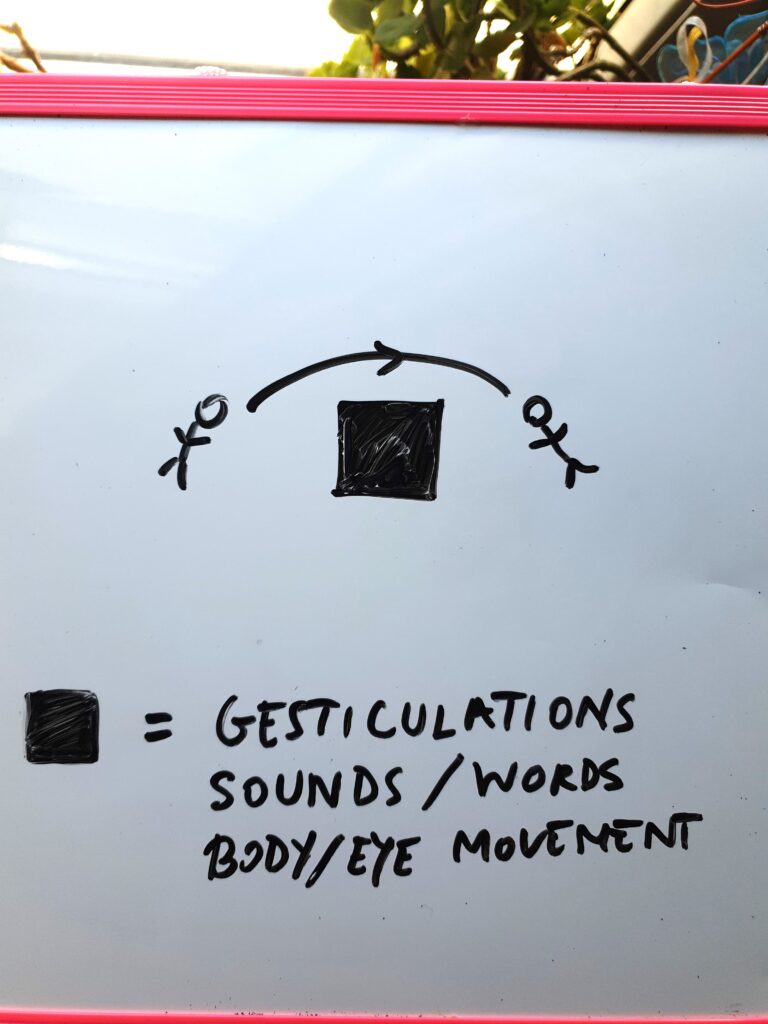
We can observe interaction as passing on a packet of information to the other.
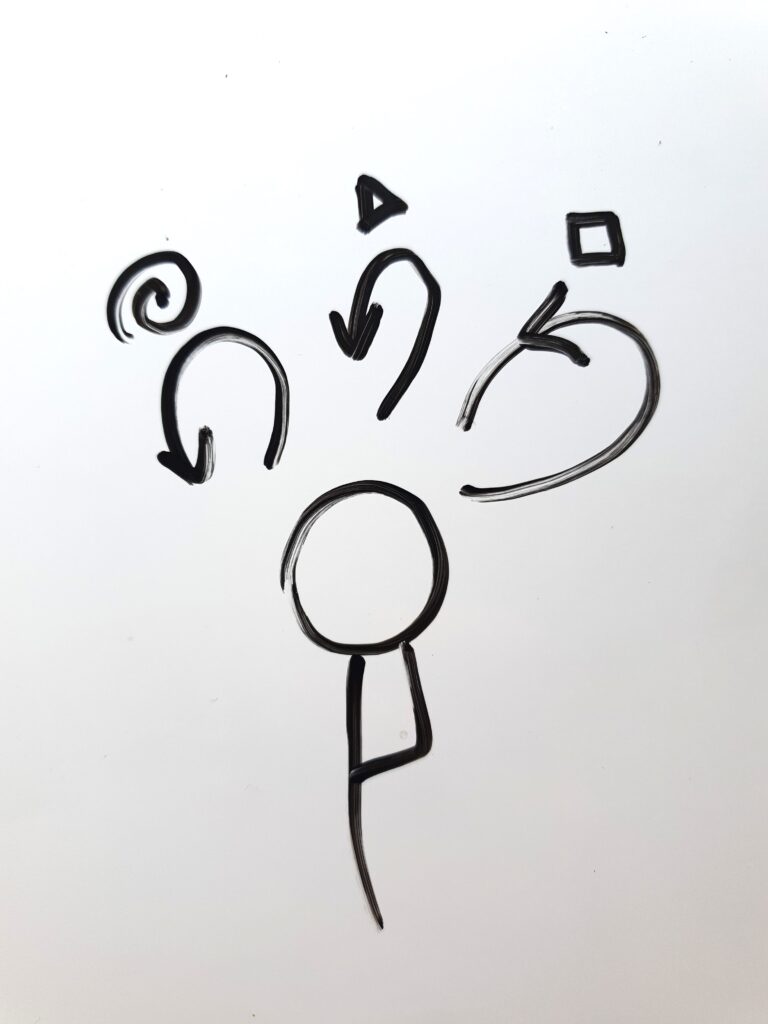
It is important to note that we are also constantly sending these packets to ourselves as well..
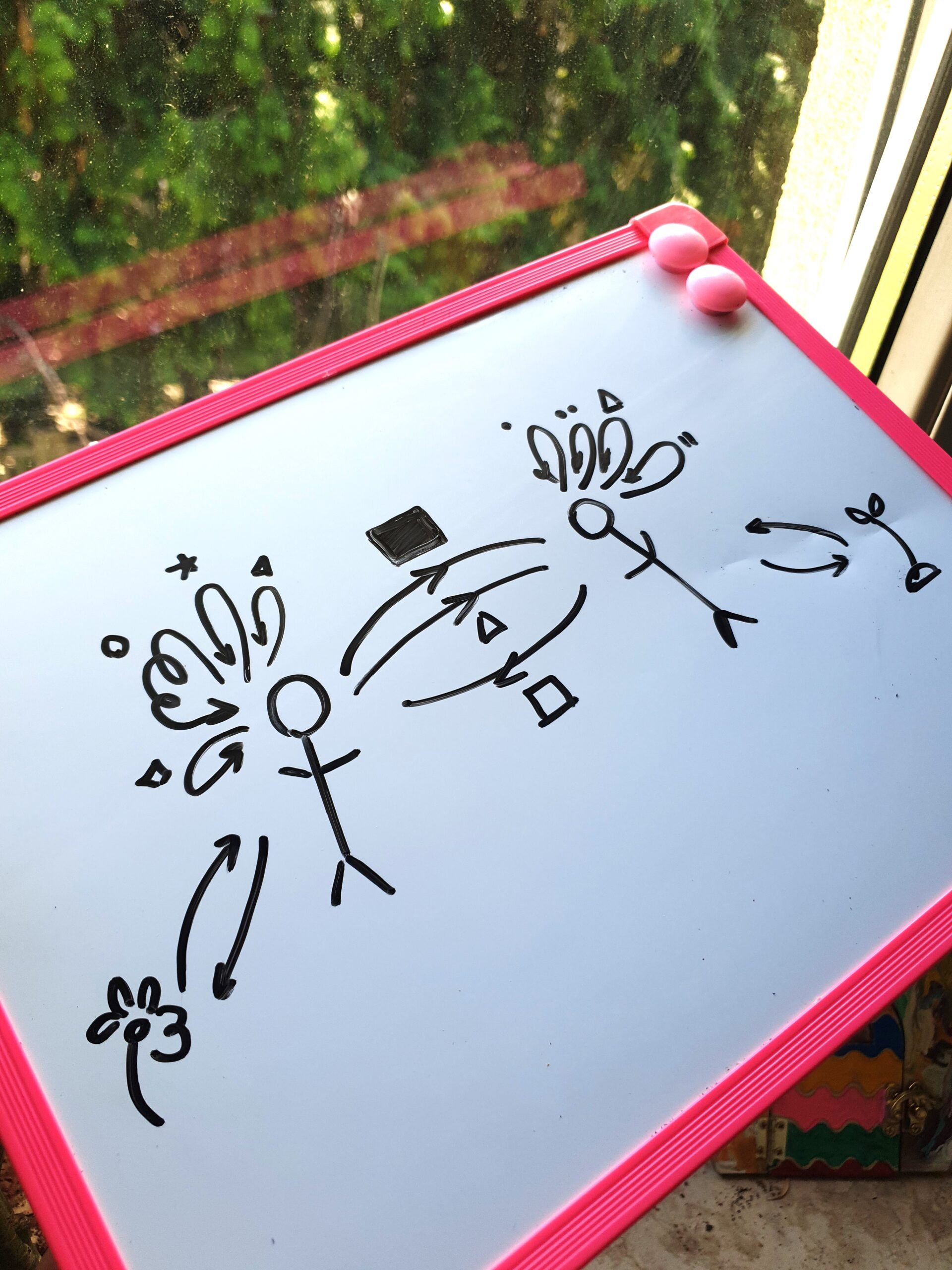
The final model of interactions – both internal and external then looks like this.
Communication is the ability to unpack the given packages in an interval of time with good enough speed to follow through the main threads of the internal processes and give a package back.
Packets that we receive from the interactions we are having can have various formats and composite structures. So “un-ziping” them is not just a skill that takes time and practice but observational spectrum of analysis when engaging in any communication situation.
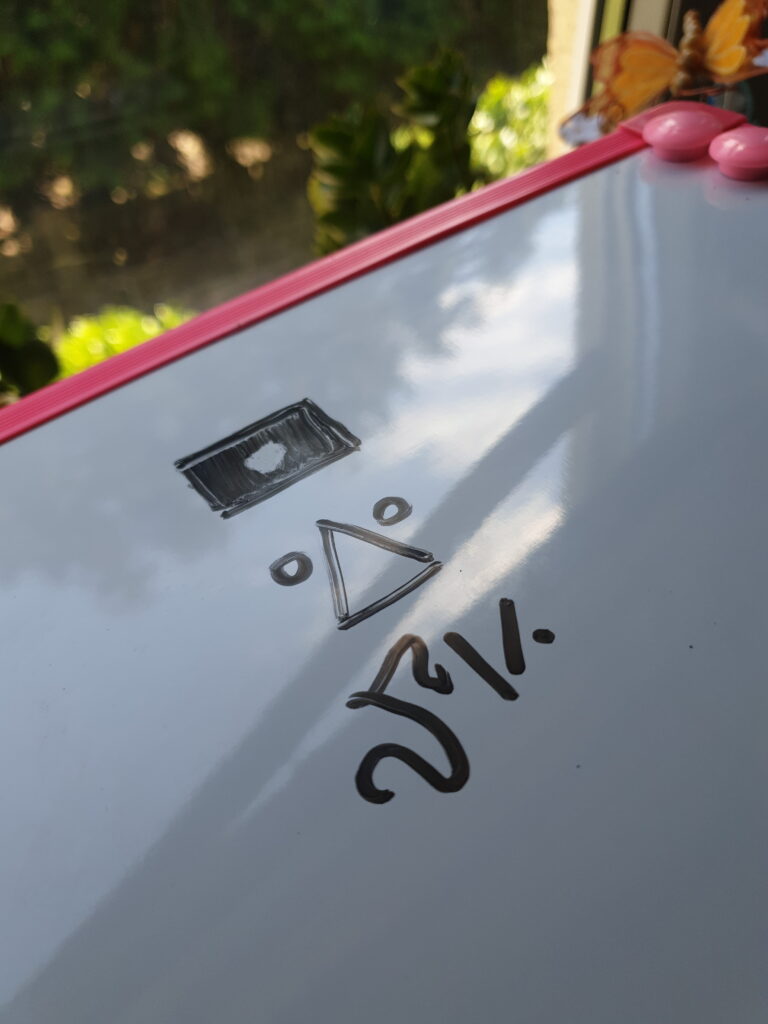
Since most of the time we are not aware of all the composite structures or learned definitions that can be differently perceived by each individual we miss the key part of communication – mutual understanding.
Intuitive communication bypasses these problems by getting to the core of the message and context which can be experienced quickly.
After initial tuning in, releasing the frequencies we have arrived with in the moment (usually a somatic practice of body shaking) we focus on a theme and observe its frequency.
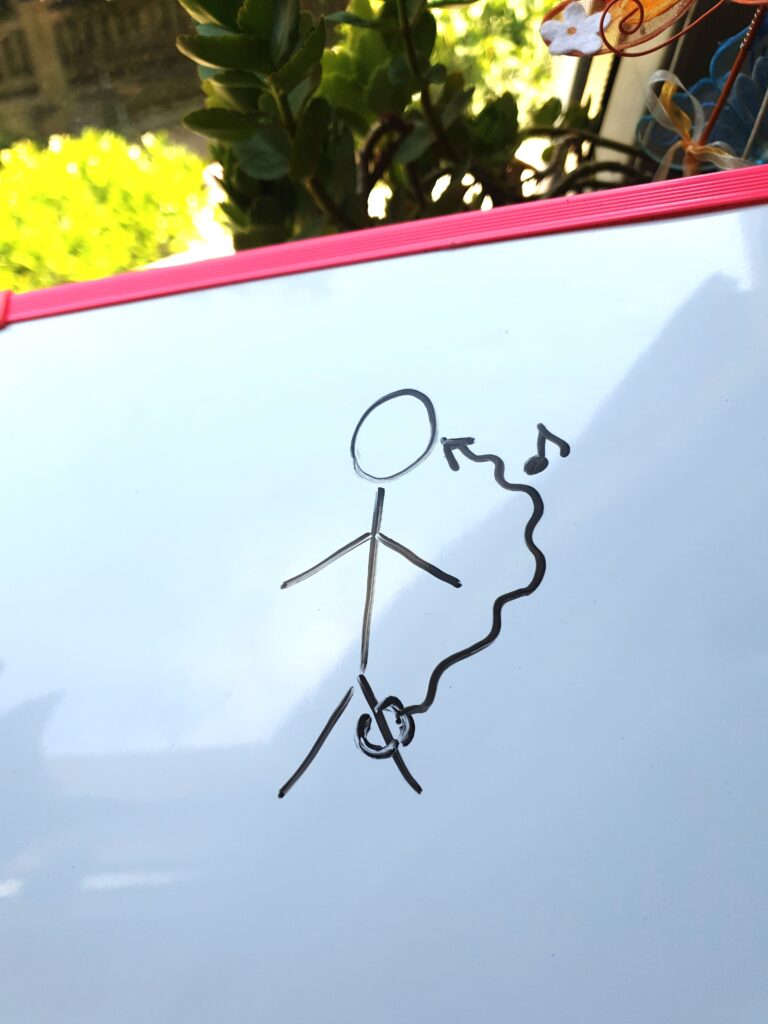
At this stage we can use a variety of approaches, either with sound, body movement, art expression or expressing analytical structure – regardless of the approach used here what is always present is paper for taking notes and bounce off them in an intuitive fashion.
As we observe another’s abstract expression we listen to the messages that resonate for us in that moment – hearing those messages the listener can use them as a key that works both ways; both for understanding the other better and the way they perceive us and for his own better understanding of himself and the way he perceives the world.
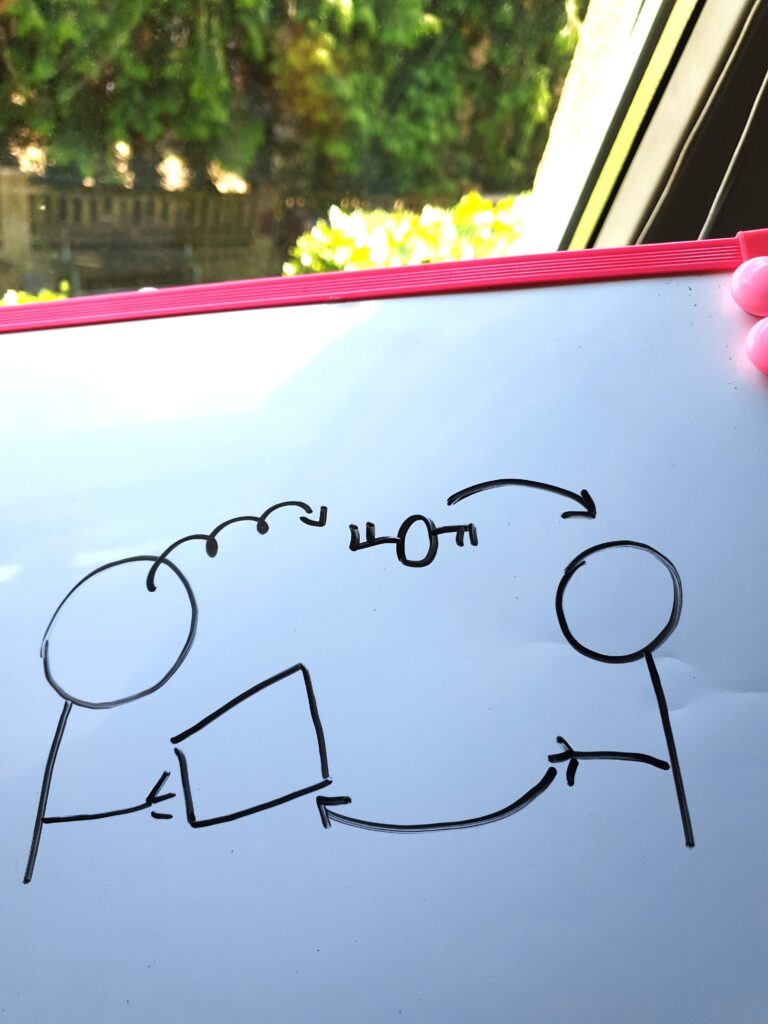
After enough iterations of key exchanges from both sides we have achieved initial mutual tuning in and can now proceed to focus our theme queries – these can now be as general, random or specific as the participants want them to be.
Using abstract methods we are now entering a playground where thoughts, emotions and physical sensations can be presented, interpreted and understood on a deeper level.
To start performing the act of intuitive communication with yourself now NOW requires your presence and creativity – with time the amount of allowance from yourself to go deeper will unlock, don’t force it, sometimes only a short practice that is sluggish and lazy made is still worth the process than not doing it at all.
As you keep a log you will also soon notice the main patterns you are tangled with and how and what you express differently in different states.
- Turn off the mind – choose your preferred activity, it is important that it is dynamic and moving, suggestions: body shaking, dancing, walking backwards, walking looking only up.. be free to invent your own
- Tune in – listen to your body, if you have troubles to focus or don’t have a specific target point then suggestions are: find the loudest point (that one usually hurts the most in the moment of observation), find the quietest point (that one is more tricky to find, but really fun to do)
- Expression – giving the bodily sensation a sound, shape and form, either using paper or even simple gesticulations with your face and taking a few snapshots to tell a story in frames – no matter if you use an abstract or direct approach here the process still remains the same so feel free to do what is natural to you and experiment through it.
- Listening – extracting keys by observing our expression, whether it is a sound that has been recorded, a drawing/writing on a piece of paper or a set of images or videos of ourselves we write down – we write down our impressions that serve as keys for the next round.
- Repeat the steps [1-4] with the new input key (Bounce Off)
You can choose to interact with anything using this method – including inanimate objects.
The act of listening is an ongoing learning process, but also we are all tuned in to naturally receive different types of inputs and only be able to unzip certain types of information packages so don’t get discouraged if you feel like you can’t hear or that others are better than you at this.
Each perspective is valuable since it offers a unique key that we both need in some way.
Treat your keys carefully and with respect.